Haile Selassie was one of the most fascinating and controversial African leaders of the 20th century. Revered by millions, feared by political opponents, and remembered as a symbol of African resistance against colonialism, he ruled Ethiopia for more than four decades. His name became associated with African independence, royal authority, and the spiritual movement known as Rastafari.
But behind the image of the powerful emperor was a complicated story of political ambition, war, exile, modernization, poverty, rebellion, and an unexpected downfall.
How did a young Ethiopian prince become one of the world’s most recognized monarchs? How did he survive an Italian invasion and return from exile? And how did an emperor who once commanded international respect eventually lose his throne and die under mysterious circumstances?
This is the untold story of Haile Selassie, the man who ruled Ethiopia as the Lion of Judah.
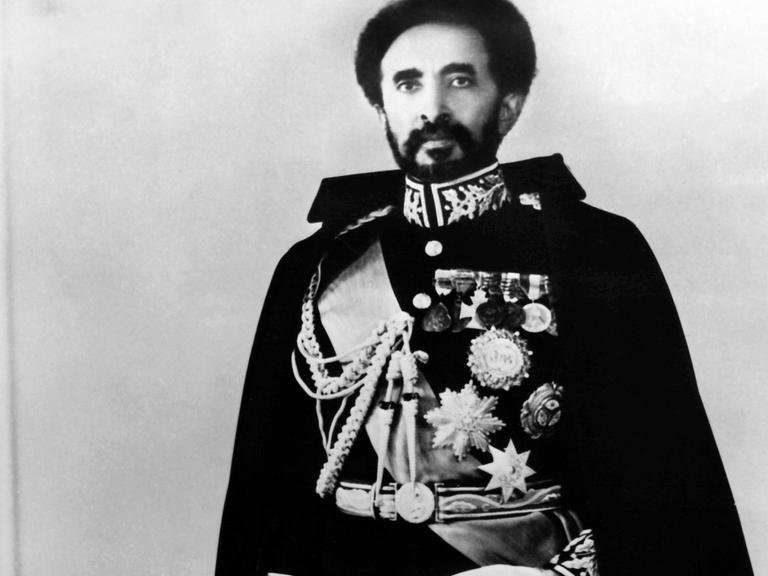
Early Life: The Boy Who Would Become Emperor
Haile Selassie was born Tafari Makonnen on July 23, 1892, in Ejersa Goro, in the Harar region of Ethiopia. He was the son of Ras Makonnen, an influential nobleman and governor who served under Emperor Menelik II.
His father was an important political figure, and his family had strong connections to Ethiopia’s royal establishment. Through these connections, Tafari was exposed to political affairs and royal traditions from an early age.
He received private education, including instruction from European tutors. His upbringing introduced him to both traditional Ethiopian political culture and aspects of Western education.
Following his father’s death in 1906, Tafari gradually gained greater responsibilities within the imperial administration.
In 1910, he became governor of Harar, an important position that increased his political influence.
However, Ethiopia’s political future was still uncertain. Following the death of Menelik II in 1913, a succession struggle developed. Tafari eventually became one of the central figures in the political movement that removed Lij Iyasu from power in 1916.
Empress Zewditu subsequently became ruler, while Tafari was appointed regent and heir to the throne.
This was the beginning of his journey toward becoming Ethiopia’s most powerful ruler.
The Rise of Ras Tafari and His Coronation as Emperor
As regent, Tafari increasingly controlled Ethiopia’s political direction. He believed the country needed modernization to survive in a rapidly changing international environment.
He supported educational reforms, improvements to government administration, and stronger diplomatic relationships with foreign countries.
One of his important achievements came in 1923, when Ethiopia joined the League of Nations. This was significant because it strengthened international recognition of Ethiopian sovereignty.
In 1928, Tafari received the title of Negus, meaning king.
Two years later, following the death of Empress Zewditu, he was crowned emperor on November 2, 1930.
He adopted the name Haile Selassie I, commonly translated as “Power of the Trinity.”
His coronation attracted international attention, with foreign dignitaries attending the ceremony.
As emperor, he held several impressive titles, including King of Kings, Lord of Lords, and Conquering Lion of the Tribe of Judah.
But his greatest challenge was approaching from across the Red Sea.
Italy Invades Ethiopia: The Emperor Faces His Greatest Challenge
In October 1935, Fascist Italy, under Benito Mussolini, invaded Ethiopia.
Italy wanted to expand its colonial empire in Africa and avenge its earlier defeat at the Battle of Adwa in 1896, when Ethiopian forces had defeated an Italian invasion.
This time, however, Italy arrived with a much stronger military force, including modern aircraft, tanks, artillery, and chemical weapons.
Ethiopian soldiers fought courageously, but they were severely outmatched.
Italian forces used mustard gas against Ethiopian troops and civilians, despite international agreements prohibiting chemical warfare.
As the Italian advance continued, the Ethiopian military struggled to stop the invasion.
By May 1936, Italian forces had captured Addis Ababa, forcing Haile Selassie to leave his country.
For an emperor who had spent years strengthening Ethiopia’s international position, the invasion represented a devastating political and personal defeat.
However, he refused to accept the destruction of Ethiopian independence.
The Historic Speech That Challenged the World
On June 30, 1936, Haile Selassie appeared before the League of Nations in Geneva, Switzerland.
He delivered one of the most memorable speeches in modern African political history.
Standing before representatives of powerful countries, he condemned Italy’s invasion and accused the international community of failing to defend a sovereign nation.
He described the suffering caused by chemical weapons and warned that allowing aggression against Ethiopia would threaten international peace.
His speech was a direct challenge to the world’s major powers.
Although the League of Nations had introduced sanctions against Italy, they were ineffective in stopping Mussolini.
Haile Selassie’s appeal exposed the weakness of international institutions when powerful countries refused to act.
His words later became associated with the wider struggle against fascism and colonial domination.
But while the emperor spoke to the world, his country continued to suffer under occupation.
Life in Exile: The Emperor Who Refused to Give Up
Following the Italian occupation, Haile Selassie spent several years in exile in Britain, particularly in the city of Bath.
Although he had lost control of his empire, Ethiopian resistance fighters continued fighting Italian forces.
These resistance fighters became known as the Arbegnoch, or Patriots.
They operated across different regions of Ethiopia, attacking Italian positions and maintaining the struggle for independence.
Haile Selassie continued to advocate for his country’s liberation and maintained diplomatic efforts to regain international support.
The outbreak of the Second World War eventually changed the situation.
Italy joined Nazi Germany as part of the Axis powers, bringing Ethiopia’s struggle into the wider conflict between the Axis and Allied forces.
In 1941, British forces, working alongside Ethiopian resistance fighters, helped drive Italian forces out of Ethiopia.
On May 5, 1941, Haile Selassie returned triumphantly to Addis Ababa.
After five years in exile, the emperor was back on his throne.
His return became a powerful symbol of Ethiopian resistance and the restoration of national independence.
Haile Selassie’s Achievements and Modernization of Ethiopia
After returning to power, Haile Selassie focused on rebuilding Ethiopia and strengthening the central government.
His administration introduced several reforms intended to modernize the country.
Education: His government expanded schools and educational institutions, including higher education. Addis Ababa University, established in 1950 as the University College of Addis Ababa, became an important part of the country’s educational development.
Infrastructure: Roads, communication systems, and government institutions were expanded as Ethiopia sought to strengthen its economy and administration.
Constitutional reforms: A revised constitution was introduced in 1955, establishing additional formal institutions and setting out certain rights. However, the emperor retained extensive political authority.
Abolition of slavery: Haile Selassie’s government continued the formal abolition process, with slavery officially prohibited in Ethiopia in 1942.
Military development: He strengthened the Ethiopian armed forces and developed international military relationships, including cooperation with the United States.
These reforms helped transform parts of Ethiopian society, but modernization was uneven. Many rural communities continued to experience poverty, limited access to education, and inadequate healthcare.
The emperor’s government also maintained a highly centralized political system, limiting opportunities for democratic opposition.
Haile Selassie and the Birth of the Organization of African Unity
One of Haile Selassie’s most important international achievements was his contribution to African unity.
During the 1950s and 1960s, African countries were gaining independence from European colonial powers.
However, political disagreements, territorial disputes, and competing ideologies threatened cooperation between the newly independent nations.
Haile Selassie believed African countries needed a common organization to defend their independence and promote cooperation.
In May 1963, leaders from 32 independent African states gathered in Addis Ababa, Ethiopia.
Their meeting resulted in the establishment of the Organization of African Unity, now known as the African Union.
Haile Selassie played a major diplomatic role in bringing the leaders together.
The organization promoted African solidarity, opposition to colonialism, and cooperation among independent African countries.
His involvement strengthened his international reputation and established Ethiopia as an important centre of African diplomacy.
Haile Selassie and the Rastafari Movement
Haile Selassie’s influence extended far beyond Ethiopia because of his connection to the Rastafari movement.
The movement emerged in Jamaica during the 1930s, inspired partly by the coronation of Ras Tafari as emperor of Ethiopia.
Some Rastafari followers regarded him as a divine figure, the promised Messiah, or the earthly representation of God.
His royal titles, Ethiopian heritage, and symbolic connection to the biblical tradition of the Lion of Judah contributed to this belief.
Reggae musicians, particularly Bob Marley, helped spread Rastafari ideas internationally.
As a result, Haile Selassie became a spiritual symbol for millions of people who associated Ethiopia with African identity, dignity, resistance, and liberation.
Although Haile Selassie was an Ethiopian Orthodox Christian, and interpretations of his relationship with Rastafari varied, his international cultural influence became extraordinary.