Thomas Sankara’s untold biography is the story of an African revolutionary who challenged corruption, fought poverty, promoted women’s rights, and dared to imagine a different future for his country. Known as the president who wanted to transform Africa, Sankara became one of the most influential political figures in modern African history. His leadership in Burkina Faso was short, but his ideas, revolutionary policies, and mysterious assassination continue to inspire conversations about African independence and leadership.
But who was Thomas Sankara? How did a young military officer become one of Africa’s most celebrated revolutionary leaders? And what really happened during the final moments of his life?
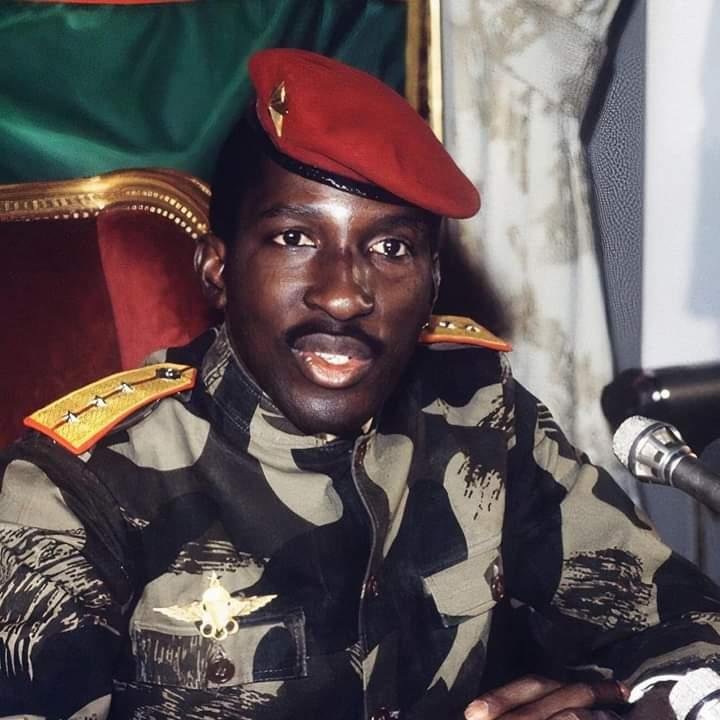
Early Life and Childhood of Thomas Sankara
Thomas Isidore Noël Sankara was born on December 21, 1949, in Yako, Upper Volta, now known as Burkina Faso. He grew up in a relatively modest family, with his father, Joseph Sankara, serving in the French colonial administration.
His childhood was shaped by the realities of colonial rule, poverty, and social inequality. Although his family had Catholic influences, Sankara grew up in a culturally diverse environment that exposed him to different African traditions and beliefs.
As a young boy, he demonstrated intelligence, discipline, and a strong interest in education. His parents hoped he would pursue a respectable career, but his ambitions eventually took him in a different direction.
Thomas Sankara’s Military Career
Sankara joined the military at a young age and attended military training in Madagascar. His experience abroad played an important role in shaping his political consciousness.
During his time in Madagascar, he witnessed student demonstrations, political activism, and movements demanding social change. These experiences influenced his understanding of revolution, nationalism, and the responsibility of government toward ordinary citizens.
Unlike many military officers who pursued personal wealth and political influence, Sankara developed a reputation for discipline and modest living.
He also became interested in Marxist and anti-imperialist ideas, believing that African countries needed genuine economic independence rather than continued dependence on foreign powers.
How Thomas Sankara Rose to Power
The political situation in Upper Volta during the early 1980s was unstable. The country experienced repeated military coups, economic difficulties, corruption, and political disagreements.
Sankara gradually became an important figure within the military and government. In 1983, he was appointed prime minister under President Jean-Baptiste Ouédraogo.
However, political tensions soon developed between Sankara and other members of the government.
On August 4, 1983, Sankara came to power through a military coup supported by Blaise Compaoré and other revolutionary officers.
At just 33 years old, he became president of Upper Volta and began introducing a radical programme aimed at transforming the country.
Why Thomas Sankara Changed the Name of Upper Volta to Burkina Faso
One of Thomas Sankara’s most significant decisions was changing the country’s name from Upper Volta to Burkina Faso on August 4, 1984.
The name Burkina Faso combines words from two major local languages. It is commonly translated as the “Land of Upright People.”
The change represented Sankara’s desire to break away from the country’s colonial identity and establish a stronger sense of national pride.
He also encouraged citizens to see themselves as active participants in building their nation rather than depending entirely on political leaders or foreign governments.
Thomas Sankara’s Revolutionary Policies and Achievements
Sankara’s presidency introduced major changes across several sectors of Burkinabè society.
1. Fighting Corruption
Sankara strongly opposed corruption and government extravagance. He reduced presidential privileges, sold expensive government vehicles, and promoted a simpler lifestyle among public officials.
He believed political leaders should live closer to the conditions experienced by ordinary citizens.
2. Promoting Education
Education became a major priority of his government. His administration launched programmes to improve school attendance, expand literacy, and make education more accessible, particularly in rural communities.
3. Improving Healthcare
Sankara’s government organised vaccination campaigns against major childhood diseases, including measles, meningitis, and yellow fever.
These campaigns demonstrated the government’s commitment to improving public health and reaching communities that had previously received limited medical attention.
4. Promoting Women’s Rights
One of the most remarkable aspects of Sankara’s leadership was his commitment to women’s empowerment.
He appointed women to important government positions, encouraged girls’ education, opposed forced marriage and female genital mutilation, and challenged traditional practices that disadvantaged women.
He argued that African development could not succeed while women remained excluded from political and economic opportunities.
5. Promoting Agriculture and Self-Reliance
Sankara wanted Burkina Faso to become more economically independent. His administration encouraged local agricultural production, rural development, and domestic food security.
He challenged the idea that African countries should rely permanently on foreign food assistance while possessing the resources and people needed to produce their own food.
Thomas Sankara and His Fight Against Western Imperialism
Sankara became internationally recognised for his criticism of colonialism, economic exploitation, and foreign domination.
He believed African independence was incomplete without economic independence.
In 1987, during a speech at the Organisation of African Unity summit in Addis Ababa, Ethiopia, he strongly criticised Africa’s growing external debt.
He argued that African countries should collectively challenge the debt system rather than allowing individual governments to remain trapped in financial dependence.
His position attracted admiration from supporters of African liberation movements but also created tensions with powerful international interests.
Thomas Sankara’s Relationship with Blaise Compaoré
One of the most important relationships in Sankara’s political life was his friendship with Blaise Compaoré.
Compaoré was a fellow military officer and revolutionary who helped Sankara come to power in 1983.
The two men initially shared political ambitions and worked together to establish the revolutionary government.
However, political disagreements and tensions gradually developed within the leadership.
Their relationship became particularly important in the events of October 15, 1987, when Sankara was assassinated during a coup.
Compaoré subsequently became president and remained in power until 2014.
His role in the circumstances surrounding Sankara’s death became a major subject of investigation and public debate.
How Thomas Sankara Was Assassinated
On October 15, 1987, Thomas Sankara was assassinated during a violent coup in Ouagadougou, the capital of Burkina Faso.
He was attending a meeting at the National Council of the Revolution when armed attackers struck.
Sankara and twelve others were killed.
His death shocked Burkina Faso and reverberated across Africa and the international community.
Blaise Compaoré took control of the government shortly afterward, marking the end of Sankara’s revolutionary leadership.
For decades, questions remained about the planning of the assassination, the individuals involved, and possible foreign connections.
In April 2022, a military court in Burkina Faso sentenced Compaoré in absentia to life imprisonment for his role in the assassination, alongside other convictions in the case.
The trial represented a major development in the long struggle for accountability over Sankara’s death.
Thomas Sankara’s Legacy: Why Africa Still Remembers Him
More than three decades after his assassination, Thomas Sankara remains an important symbol of African independence, political courage, and social transformation.
His supporters remember him for his modest lifestyle, anti-corruption campaigns, commitment to women’s rights, and efforts to promote national self-reliance.
His critics, however, also point to the authoritarian aspects of his revolutionary government, including restrictions on political opposition and the use of revolutionary tribunals.
Understanding Sankara’s legacy requires examining both his achievements and the controversies surrounding his leadership.
Nevertheless, his influence continues to reach beyond Burkina Faso. Across Africa and the wider world, young activists, historians, political thinkers, and supporters of African liberation continue to study his ideas.
Conclusion: The Untold Story of Thomas Sankara
The untold biography of Thomas Sankara is more than the story of a military officer who became president. It is the story of a young revolutionary who challenged established political and economic systems and attempted to create a different future for his country.
His presidency lasted only four years, but his influence has endured for generations.
From his fight against corruption and foreign dependency to his efforts to improve healthcare, education, and women’s rights, Sankara left behind a complicated but powerful historical legacy.
His assassination in 1987 ended his life, but it did not end the questions surrounding his revolution or the ideas he represented.
Today, Thomas Sankara remains one of Africa’s most discussed revolutionary leaders, remembered by many as a president who dared to dream of a self-reliant and independent Africa.